

Table of Contents
- Brushing Your Dog's Coat
- Bathing Your Dog
- Trimming Your Dog's Nails
- Cleaning Your Dog's Ears
- Cleaning Your Dog's Eyes
- Brushing Your Dog's Teeth
- Frequently Asked Questions
Keeping your dog well-groomed involves more than just the occasional trip to the groomer. Plenty of grooming tasks can be easy to handle at home to keep your pup comfortable and looking their best between professional visits, and give you a chance to spot anything unusual on their skin, ears, or coat early.
The main at-home dog grooming tasks you can do include brushing, bathing, nail care, ear cleaning, and teeth brushing. We'll go over how you can tackle each one and how often to do it.
Brushing Your Dog's Coat
While you might leave haircuts to the professionals, brushing your dog's fur is something to keep up with at home. Brushing helps remove dirt and loose hair, prevents tangles and mats, and spreads your dog's natural oils for a healthy coat. It's also a great chance for you to check for lumps, ticks, fleas, or anything out of the ordinary.
Here's the recommended brush for your dog's coat type:
- Short coats: A rubber curry brush or grooming mitt to lift loose hair.
- Long coats: A slicker brush and a comb to work out tangles.
- Double coats: A de-shedding tool to thin out the undercoat.
How often you brush your pup depends on their coat. Short-haired dogs do well with weekly brushing, while long or double-coated pups usually need a few sessions a week to stay tangle-free. For more on coat care and seasonal shedding, check out our blog on summer dog grooming tips.
Bathing Your Dog
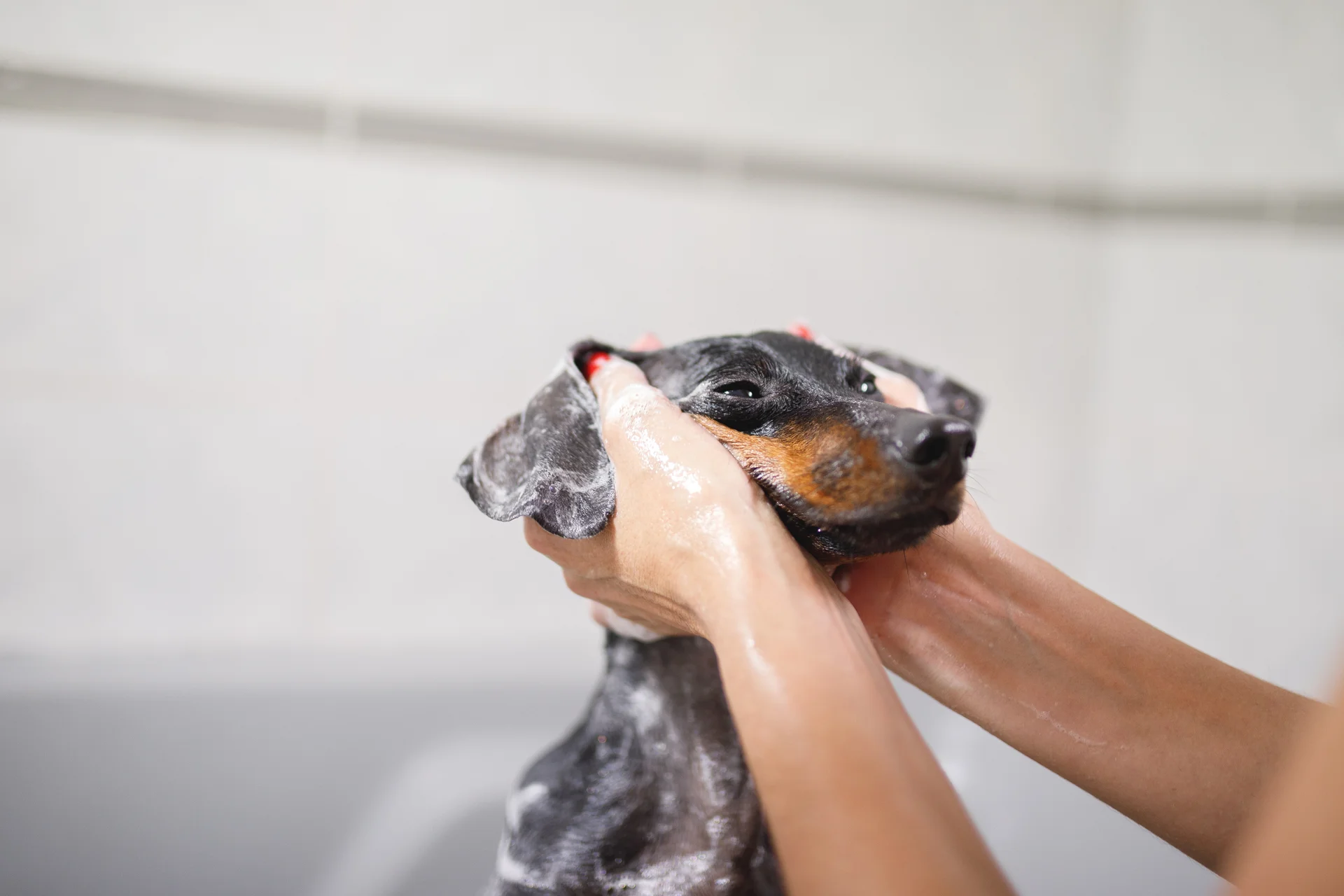
Most dogs only need a bath every four weeks or so, or whenever they're visibly dirty, since washing too often can dry out their skin.
Here are a few tips to make bath time easier for both of you:
- Brush first. Working out tangles before they get wet keeps them from tightening into mats.
- Use lukewarm water and a dog-safe shampoo. Human shampoo can irritate your pup's skin.
- Avoid the eyes and ears. Wet the coat, lather, and rinse while gently keeping water out of their face.
- Rinse thoroughly. Leftover shampoo can leave your dog itchy, so rinse until the water runs clear.
If your pup finds bath time stressful, take it slow and pair it with treats and praise to help them feel more at ease over time.
Trimming Your Dog's Nails
Regular nail trims keep your dog comfortable and prevent overgrowth that can affect how they walk. Make sure no fur is in the way, and clip just the tip of the nail, staying well clear of the quick. This one can feel tricky at first, but with the right tools and a little patience, you've got this.
For a full step-by-step guide, including how to handle black nails and how often to trim, check out our blog on dog nail trimming.
Cleaning Your Dog's Ears
Regularly cleaning your dog's ears helps prevent buildup, irritation, and infection, especially if you have a floppy-eared breed or a pup who loves to swim. Most dogs only need their ears cleaned about once a month, though swimmers and long-eared dogs may need it more often.
Here's how you can clean your dog's ears at home:
- Apply the cleaner: Use a dog-safe, vet-recommended ear-cleaning solution. Gently lift your dog's ear flap and squeeze the solution into the ear canal, without pushing the bottle tip down inside it.
- Massage the base: Gently massage the base of the ear for 20 to 30 seconds. You'll often hear a soft squishing sound as the cleaner loosens debris.
- Let them shake: Step back and let your dog shake their head, which brings the loosened gunk up and out.
- Wipe it away: Wrap a cotton ball or pad around your finger and gently wipe the visible part of the ear. Never push cotton swabs or anything else deep into the ear canal.
- Repeat if needed: Clean until the cotton comes away clean, then gently dry the area.
Give your vet a call if your dog's ears are red, swollen, smelly, or have a dark discharge, since these can be signs of an infection that needs treatment rather than a routine cleaning.
Cleaning Your Dog's Eyes
Keeping the area around your dog's eyes clean helps prevent irritation and gently clears away the dirt or discharge that can gather in the corners.
Here's how to do it safely:
- Grab your supplies: Use a soft, lint-free cloth dampened with warm water, or a dog-safe eye wipe. If your pup has hard, crusty buildup, a little sterile dog-safe saline can help soften it.
- Loosen any crust first: If the "eye boogers" are dried on, hold the warm, damp cloth against the area for 10 to 15 seconds to soften them before wiping, so you're not tugging at the skin.
- Wipe from the inside out: Gently wipe from the inner corner of the eye outward, which keeps you from pushing debris back toward the tear duct.
- Use a fresh cloth for each eye: Always switch to a clean cloth or wipe for the second eye so you're not spreading anything from one to the other.
- Pat dry: Gently dry the fur around the eyes with a clean, soft cloth or tissue.
Be careful never to touch the eyeball itself, and stick to the fur and skin around it. If you notice redness, swelling, excessive tearing, cloudiness, or your pup pawing at their eyes, check in with your vet, as these can be signs of a condition that needs treatment.
Brushing Your Dog's Teeth
Just like you, your dog needs regular teeth brushing for good dental health. Use a toothbrush made for dogs and pet-safe toothpaste, never human toothpaste, which contains ingredients that are toxic to dogs. Brushing several times a week helps prevent plaque, tartar, and dental disease, and dental chews or teeth-cleaning treats can help in between brushings.
For a deeper look at your pup's dental care, see our blog on doggy dental care.
Play and Freshen Up at Camp Bow Wow®
If your pup is due for a deeper clean or a little extra pampering, Camp Bow Wow® can help!. Our grooming services, from baths to nail trims, can be added right onto your dog's daycare or boarding stay, so you can drop off your pup and pick up a happy, clean, fresh-smelling Camper.
Find your local Camp Bow Wow® and book your dog's visit today!
Frequently Asked Questions
How Often Should I Groom My Dog at Home?
It depends on the grooming task. Brushing is a few times a week (daily for long coats), baths are about once a month, nail trims every 3 to 6 weeks, ear cleanings about monthly, and teeth brushing several times a week. Your dog's breed, coat, and lifestyle all play a role, so adjust as needed or based on your vet or groomer's recommendation.
What Grooming Should Be Left to a Professional?
Haircuts and styling, especially around the face and sensitive areas, are usually best left to a groomer, along with anything your dog finds too stressful to sit through at home. A professional groomer can also handle nail trims, baths, and ear cleanings if you'd prefer not to.