

Table of Contents
- Why Dog Dental Care Matters
- Signs of Dental Disease in Dogs
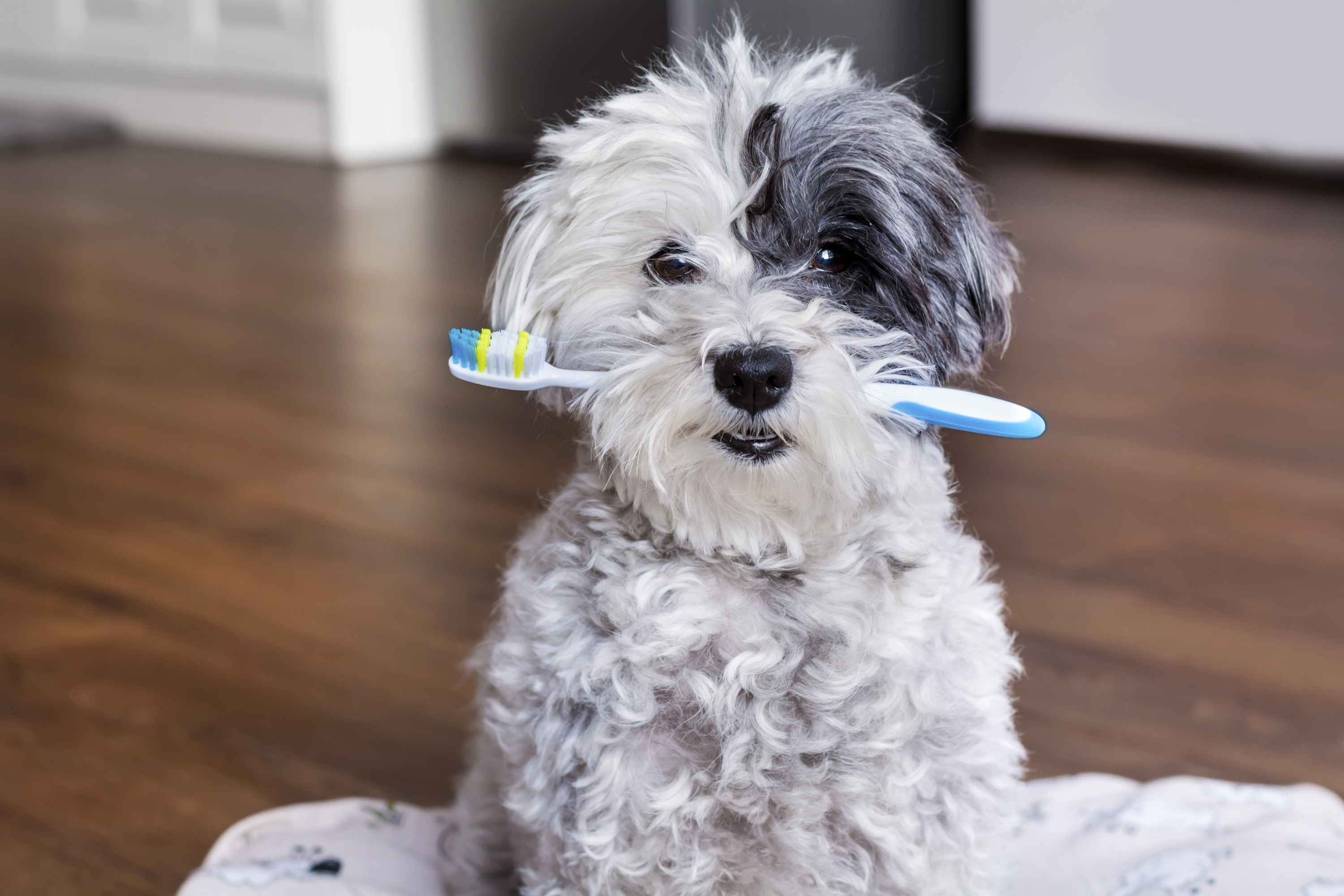
- How to Keep Your Dog's Teeth Clean at Home
- Schedule Annual Dental Checks With Your Vet
- Frequently Asked Questions
February is National Pet Dental Health Month! Dental care is an important part of your pet’s health and longevity. According to the American Veterinary Medical Association (AVMA), dental disease affects up to 80% of dogs and cats by the time they are just three years old. Dental disease can impact not only your dog’s breath, gums, and teeth, but also cause other diseases if not treated.
Below, we'll go over why dental care matters, the signs of dental disease to watch for, and how to keep your pup's teeth clean at home and with your vet.
Why Dog Dental Care Matters
Many pet parents assume a dog's breath is naturally bad. While it may not be minty fresh, it shouldn't make you wrinkle your nose, since persistent bad breath is often the first sign of dental disease.
When plaque builds up and hardens into tartar, bacteria can work below the gumline and infect the tooth roots. From there, bacteria can enter the bloodstream and affect other organs, including the heart and kidneys. Dental disease can also cause chronic pain that dogs are very good at hiding. A healthy mouth supports a healthy pup from nose to tail.
Signs of Dental Disease in Dogs
Pets don't show pain the same way humans do, and their pain can often go undetected until the problem becomes more severe, so pay close attention to your pup's mouth and behavior.
Signs of dental disease include, but are not limited to:
- Inflamed, reddened, or bleeding gums
- Bad breath
- Discolored or loose teeth
- Frequent licking of the mouth
- Constant pawing at the mouth
- Unwillingness or hesitance to chew food or toys
- Excessive drooling
- Other changes in behavior
If you notice any of these signs or other concerns, make an appointment with your vet right away to prevent the situation from worsening. Since our pets can't tell us what exactly is wrong, they rely on us to pay attention to their needs and get any ailments addressed.
How to Keep Your Dog's Teeth Clean at Home
The good news is that dental disease can be prevented with proper, proactive care.
Here's the best way to clean your dog's teeth at home:
Brush Your Dog's Teeth Daily
Brushing is the most effective way to remove plaque and tartar buildup, and daily is the goal. Intermittent or occasional brushing won't offer much benefit for your pup, so if daily feels like a lot, set a phone reminder and build the habit one day at a time.
Bonus: A regular brushing routine can also make your dog calmer when your vet checks their teeth at routine appointments.
A few basics to get started:
- Use dog-specific toothpaste only. Human toothpaste can contain ingredients toxic to dogs, such as xylitol. Dog toothpaste comes in flavors pups actually enjoy, like chicken and peanut butter.
- Pick the right brush. A dog toothbrush or a soft finger brush both work. Ask your vet which is best for your pup's size and comfort level.
- Go at your dog's pace. Short, positive sessions beat wrestling matches. Even brushing just the outer surfaces of the teeth helps.
Try Dog Tooth Wipes
If your pup won't sit still for a toothbrush, tooth wipes are a helpful alternative. You simply rub the wipe over your dog's teeth to remove surface plaque.
They can't reach the tight spaces a brush can, but they're an easy option for wiggly dogs or for freshening up between brushings.
Offer Your Dog Dental Treats and Safe Chew Toys
Chewing is one of the ways dogs naturally scrape plaque off their teeth, and dental treats and chew toys can supplement daily brushing:
- Look for treats and chews with the Veterinary Oral Health Council (VOHC) seal, which means the product is proven to help control plaque and tartar
- Avoid extra hard bones, antlers, or sticks that can chip or crack your dog's teeth
- Choose ribbed or knobby rubber toys, ropes, or chews that help scrape away plaque
- Make sure any toys and treats are the right size for your dog and don't pose a choking hazard
Ask Your Vet About Water Additives and Dental Diets
For dogs that resist brushing, your vet may suggest additional options like dental water additives, powders that sprinkle over food, or a prescription dental diet with kibble designed to clean teeth as your dog chews. Your vet can recommend what's right for your pup's specific needs.
Schedule Annual Dental Checks With Your Vet
Even with a great at-home routine, some tartar will still build up over time, especially below the gumline where you can't reach. That's why a thorough dental check with your veterinarian at least once a year is so important.
At your visit, you can:
- Discuss any concerns you might have
- Review your dog's at-home dental care routine
- Determine what professional dental cleaning schedule is best for your dog
Professional cleanings let your vet remove tartar above and below the gumline and catch problems early. How often your dog needs one depends on their breed, age, and at-home care, so let your vet guide the schedule.
Additional Dog Dental Health Resources
Check out these sites for additional information on keeping your pup's dental health in check:
Smiles All Around at Camp Bow Wow®
A healthy mouth means more tail wags, more play, and more fun at Camp Bow Wow®. From all-day play and socialization to the attentive care of our Certified Camp Counselors®, everything we do supports your pup's wellbeing. Whether your dog joins us for doggy daycare or a cozy overnight boarding stay, they'll get plenty of exercise, enrichment, and love in a safe, supervised environment.
Find your local Camp Bow Wow® and book your pup's visit today!
Frequently Asked Questions
Do Dogs Need Their Teeth Brushed?
Yes, yes, and yes! While they don’t require 2-3 brushings a day like humans, their teeth should be brushed once or twice a week. All too often, dog owners overlook the importance of dental health, assuming a dog’s breath is naturally bad. While it may not be minty fresh all the time, it shouldn’t be that bad.
Is Bad Breath in Dogs Normal?
No, persistent bad breath isn't normal for dogs. It's actually one of the most common early signs of dental disease. If your pup's breath has gotten noticeably worse, it's worth a visit to your vet.
How Often Should I Get My Dog a Professional Dental Cleaning?
It depends on your dog's breed, size, age, and at-home care. Many dogs benefit from a cleaning around once a year, and smaller breeds often need them more frequently since they're more prone to dental disease. Your vet can recommend the right schedule for your pup.