

Table of Contents
- How to Recognize the Signs of a Dog Emergency
- Prepare Before a Dog Emergency Happens
- What to Put in a Dog First Aid Kit
- How to Handle Common Dog Emergencies
- Safety First: Even Sweet Dogs May Bite
Dogs are beloved members of many families, and, like any family member, they can sometimes get sick or injured. It's important to know the basics of dog first aid so you can provide immediate support during an emergency while you contact your veterinarian and arrange the care your dog needs.
Here's what every pet parent should know about dog first aid:
How to Recognize the Signs of a Dog Emergency
Your first lesson in first aid is learning when your dog needs professional emergency care.
Call your vet or an emergency clinic right away if you notice:
- Difficulty breathing or nonstop panting while at rest
- Bleeding that doesn't stop after a few minutes of pressure
- Collapse, weakness, or inability to stand
- Seizures or unconsciousness
- Pale, white, gray, or blue gums
- Repeated vomiting, especially with a swollen or painful belly
- Straining to urinate without producing anything
Gum color is an easy check most pet parents overlook. Healthy gums are pink and moist. Anything else can signal a serious problem, so when in doubt, call your vet.
Prepare Before a Dog Emergency Happens
A little preparation now saves precious minutes later.
- Know where you're going. Look up the nearest 24-hour emergency vet clinic and save the address and phone number in your phone. Do the same when you travel, since dogs in unfamiliar places are more prone to injuries.
- Keep records handy. A current copy of your dog's medical records helps an emergency vet treat your pup faster.
- Learn your dog's normal. Take note of your dog's resting breathing rate, energy level, and gum color when they're healthy. Knowing their baseline makes it much easier to spot when something is off.
- Consider a pet first aid class. Organizations like the American Red Cross offer courses that teach skills such as dog CPR and rescue breathing. These are hands-on skills best learned from certified instructors, not a blog post, so we recommend formal training if you want to be fully prepared.
What to Put in a Dog First Aid Kit
A well-stocked dog first aid kit belongs in your home, and a second one in your car is a smart idea. Check it a few times a year and replace anything expired.
A basic dog first aid kit should include:
- Sterile gauze pads and non-stick bandage wrap
- Adhesive tape (skip duct tape, it can damage skin and fur)
- Blunt-ended scissors and tweezers
- Digital thermometer
- Sterile saline solution
- Antiseptic wipes and pet-safe antibiotic ointment
- Styptic powder
- Disposable gloves
- An instant cold pack
- A towel or blanket
- An extra leash
- Your vet's number, the nearest emergency clinic's number, and the ASPCA Animal Poison Control Center: (888) 426-4235
How to Handle Common Dog Emergencies
These tips cover immediate steps only. In every situation below, contact your veterinarian as soon as possible, even if your dog seems to recover.
Bleeding
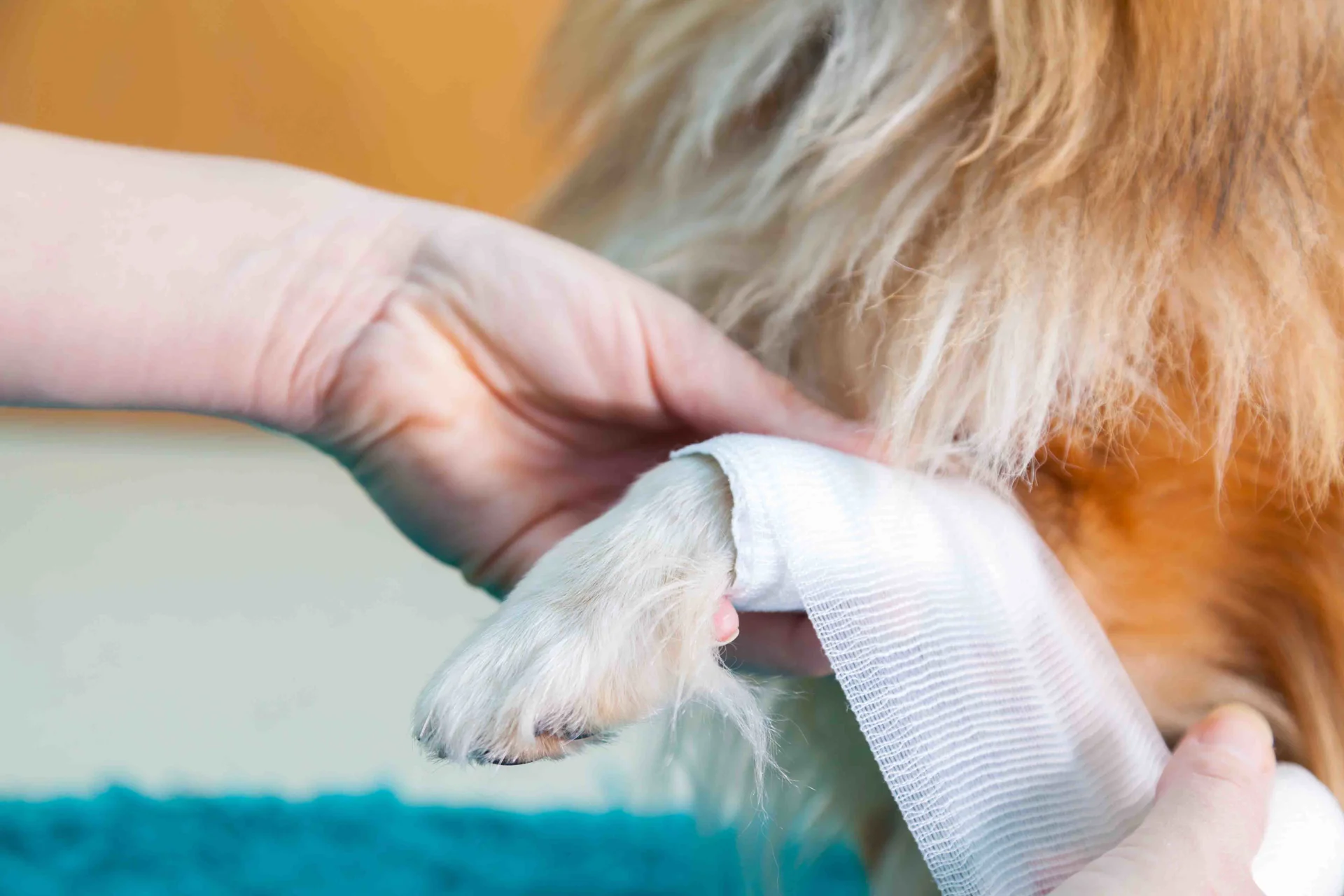
If your dog has a bleeding wound, the first thing you should do is apply even pressure to the area with a clean cloth or gauze pad and hold it in place for at least a few minutes. If blood soaks through, add a fresh layer of gauze on top rather than removing the first layer.
For minor cuts and scrapes, general dog wound care means keeping the area clean and watching for redness or swelling, and your vet can advise on cleaning and bandaging. If bleeding is heavy or won't stop, head to the vet immediately.
Choking
Dogs can easily choke on small objects or food, though they can often cough up the item on their own, so stay calm and give them a moment. A choking dog may paw at their mouth, gag, or struggle to breathe. If you can clearly see the object, you may be able to remove it carefully with your fingers or tweezers. Don't reach in blindly, since a blind sweep can push the object deeper.
If you can't remove it, you may need to perform the Heimlich maneuver by standing behind your dog, placing your hands below the rib cage, and pressing upward. Then get your pup to a vet right away, even if the object comes out. A pet first aid class is the best way to learn this technique safely before you ever need it.
Heatstroke
Dogs can quickly overheat in warm weather, leading to heatstroke, which can be fatal. Warning signs include heavy panting, drooling, a rapid heartbeat, vomiting, disorientation, and hot, sweaty skin.
Move your dog to a cool, shaded spot, offer fresh water, and wet their fur with cool water (not cold or ice). Then get them to a vet right away, even if they seem to perk up, because heatstroke can cause internal damage you can't see.
Seizures
If your dog has a seizure, don't restrain them and keep your hands away from their mouth. Clear the area of furniture or stairs they could bump into, and time the seizure if you can. Once it ends, your dog may seem wobbly or confused for a while.
Call your vet to report what happened, and treat a seizure lasting more than a few minutes as an emergency.
Suspected Poisoning
Household cleaners, human medications, antifreeze, certain foods, and some plants are all toxic to dogs. If you think your pup ate something harmful, call your vet or the ASPCA Animal Poison Control Center at (888) 426-4235 right away.
Have your dog's weight, the product packaging, and the time of ingestion ready. Never make your dog vomit unless a veterinary professional tells you to, since some substances cause more damage coming back up.
Safety First: Even Sweet Dogs May Bite
One thing emergency vets want every pet parent to know: a dog in pain may snap, even the gentlest pup in the world.
Move slowly, speak softly, and stay calm, since dogs often mirror our energy. Before approaching an injured dog, check the area for hazards such as traffic or other animals. Your safety comes first, because you can't help your dog if you get hurt too.
Bring Your Pup to Camp Bow Wow® for Safe, Fun Play
Your pup's safety is our top priority at Camp Bow Wow. Every one of our Camp Counselors is certified in pet first aid and CPR, so whether your dog joins us for a day of play or an overnight stay, a trained team is watching over them the whole time.
Find your local Camp Bow Wow and book your pup's visit today!