

Table of Contents
- Common Signs of Stress in Dogs
- Critical Signs of Stress in a Dog
- What Causes Stress in Dogs?
- How to Calm Your Stressed Dog in the Moment
- Everyday Ways to Reduce Your Dog's Stress
- When to Talk to Your Vet
- Frequently Asked Questions
Whether due to loud noises, a change in scenery, or a trip to the vet, every pup gets stressed from time to time. Dogs can't tell us how they're feeling, so it's up to us to recognize the signs and help them relax.
Stress in dogs often shows up as changes in body language, like pacing, panting, pinned ears, or yawning, and the sooner you catch it, the easier it is to help. Below, we'll cover how to tell if your dog is stressed, what causes it, ways to calm them down, and when it's time to call in some help.
Common Signs of Stress in Dogs
Dogs show stress through body language, and the earliest signs are easy to miss. The key is knowing your pup's normal behavior so you can spot when something changes.
Here are the subtle signs your pup might be feeling stressed:
- Yawning when they're not tired
- Licking their lips with no food around
- Panting when they haven't been exercising
- Pacing back and forth
- Ears pinned back
- Showing the whites of their eyes (often called whale eye)
- Shedding more than usual
- Shaking off as if wet, without being wet
A relaxed dog carries their weight evenly on all four paws, with soft eyes and forward or relaxed ears. If that picture changes and the signs above show up, your pup is likely telling you something.
Critical Signs of Stress in a Dog
Beyond the subtle cues, there are critical signs that indicate your dog's stress has escalated, they're struggling, and need help right away.
If you notice any of these critical signs, take action to help your pup:
- Trembling or shivering when they're not cold
- Cowering, hiding, or trying to escape
- Tail tucked tightly between their legs
- Refusing food or treats they normally love
- Whining, barking, or howling excessively
- Sudden diarrhea or accidents in the house
- Stiffening, growling, or snapping
Defensive behaviors like growling or snapping are your dog's way of urgently asking for space, and they usually follow earlier signs that went unnoticed. Never punish a dog for growling, since that can teach them to skip the warning next time. Some of these signs can also point to a health problem, so check with your vet if they stick around.
What Causes Stress in Dogs?
Every dog has their own triggers, and what rolls right off one pup can rattle another. These are some of the most common reasons dogs feel stressed:
- Loud noises, like fireworks, thunderstorms, or construction
- Changes in routine, such as a new work schedule, a move, or a new family member
- New or busy environments, from the vet's office to a crowded park
- Boredom, since pent-up energy with no outlet often turns into anxiety
- Being left alone, especially for pups prone to separation anxiety
- Your stress, because dogs are experts at reading our emotions and often mirror them
Figuring out what's behind your pup's stress makes it much easier to choose the right way to help.
How to Calm Your Stressed Dog in the Moment
If you notice your dog is stressed, here are some steps you can take in the moment:
- Remove them from the stressor. Move your pup to a quiet, familiar space where they can regroup.
- Stay calm yourself. Keep your voice soft and your movements slow. If you panic, your pup will pick up on it.
- Give them an out. Never force a stressed dog to interact with people or other dogs. Let them retreat if they want to.
- Offer a positive distraction. A favorite toy or a few simple, familiar cues for treats can help shift their focus. If their stress increases, stop and give them space instead.
Everyday Ways to Reduce Your Dog's Stress
A little daily care goes a long way toward a calmer pup. Here's how to reduce your dog's stress over the long run:
Give Them a Massage
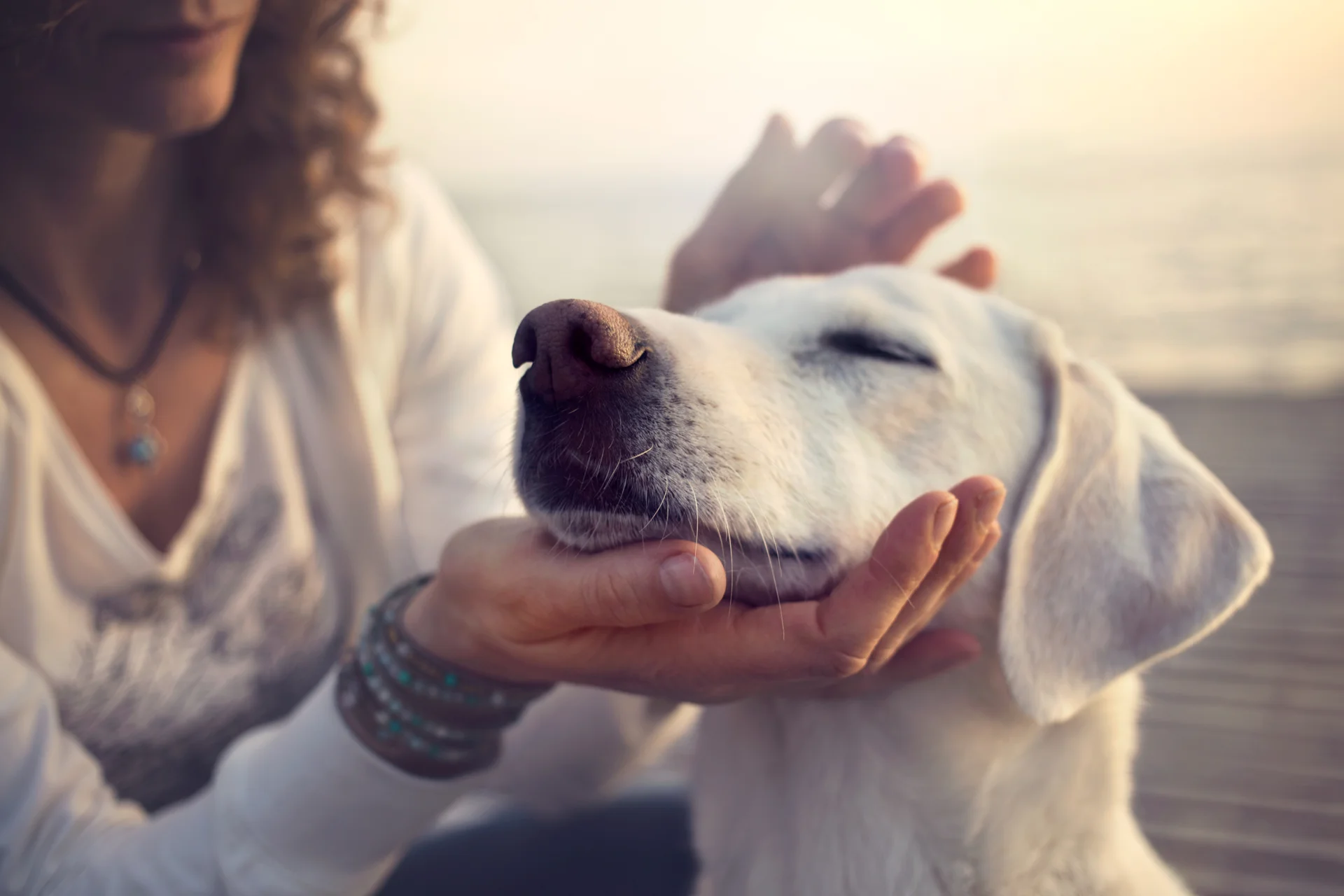
You're not the only one who loves a good back rub! Dogs also benefit from massages, which can improve circulation and release muscle tension. Start by gently petting your dog's coat, then slowly move to kneading their muscles in a circular motion.
Get Them Exercising
Regular exercise supports both physical and mental health in dogs. It tires them out and helps them release pent-up energy and stress. Set aside time each day for a walk or a game of fetch, and let them stop and sniff along the way, since sniffing is naturally calming for dogs.
Engage Their Minds
Boredom can lead to anxiety in dogs, so mental stimulation matters just as much as exercise. Puzzle toys, treat-dispensing toys, and teaching new tricks all keep their brains active and their stress levels down.
Play Calming Music
Studies have shown that classical music can calm dogs, so try some soothing tunes the next time your pup seems anxious. Soft music or white noise can also mask scary sounds like thunder or fireworks, and provide comfort when your dog is home alone.
Create a Safe Space
Every dog needs a quiet retreat of their own, whether that's a cozy crate, a bed in a low-traffic corner, or a gated-off room. When things get overwhelming, a familiar den gives your pup somewhere to decompress on their own terms.
Keep a Consistent Routine
Dogs thrive on predictability. Consistent times for meals, walks, play, and sleep help your pup feel secure, and even small schedule changes can throw them off. Keep the daily rhythm as steady as you can.
Spend Quality Time Together
Dogs thrive on companionship and attention from their pet parents. Whether it's cuddling on the couch or a special outing, extra one-on-one time reassures your pup that they're loved and not alone in their stress.
When to Talk to Your Vet
If your dog is often stressed, reacts to many triggers, or shows critical signs regularly, talk to your veterinarian.
They can rule out any health issues, discuss options like calming wraps, pheromones, or supplements, and refer you to a certified trainer or veterinary behaviorist if your pup needs more support. Frequent stress is very manageable with the right plan, and the earlier you start, the easier it is on your dog.
Keep Your Pup Stress-Free and Happy at Camp Bow Wow®
At Camp Bow Wow®, we make sure every dog has fun and feels safe, known, and loved. Our Certified Camp Counselors® are trained in dog behavior and spend all day with the pack, so they get to know each Camper and can tell when a pup needs a little extra help feeling comfortable.
Exercise and socialization are two of the best stress relievers for dogs, and a day of romping with furry friends under our team's watchful eye sends pups home happy and worn out in the best way. Find your local Camp Bow Wow® to book their dog daycare or boarding visit today!
Frequently Asked Questions
Is It Okay to Leave an Anxious Dog Alone?
Ideally, no dog should be left alone for more than four hours, and much less for puppies.
For a dog who struggles with alone time, anxiety can kick in within minutes of you leaving, or even before you walk out the door. If that sounds like your pup, build up alone time gradually, leave them with a puzzle toy or something comforting, and consider options like a pet sitter or doggy daycare for longer days.
If their anxiety isn't improving, your vet or a certified trainer can help.
What Color Calms a Dog Down?
Cool, muted tones like soft blue and sage green are generally considered the most calming colors for dogs.
Dogs see the world mostly in blues, yellows, and grays, so blue-toned bedding or a soft-colored resting space may feel more soothing than bright, high-contrast colors like red or orange, which dogs can find overstimulating.
Color alone won't fix stress, but it's an easy detail to consider when setting up your pup's safe space.