

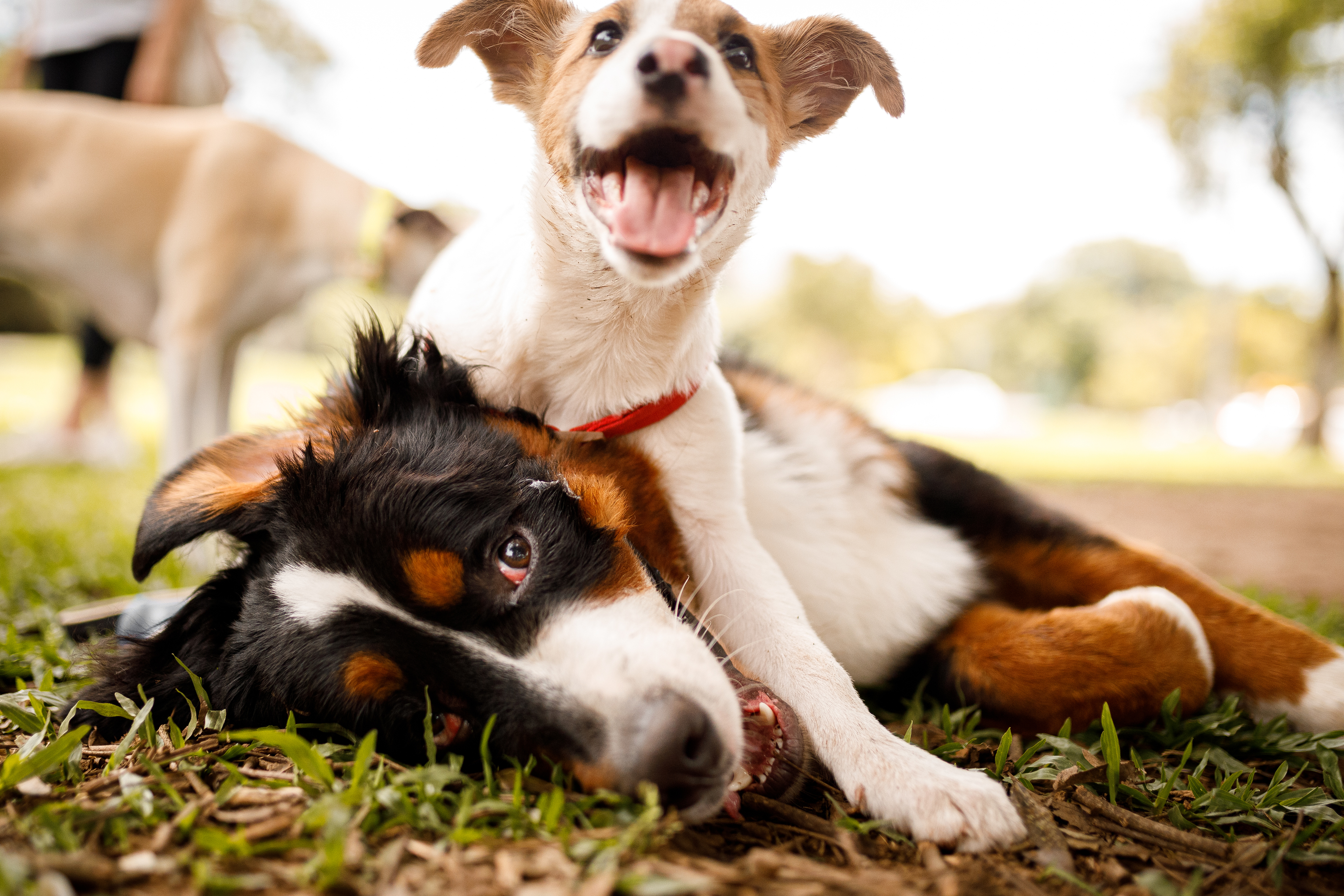
Many dogs love to interact with other dogs, and may do so through energetic, physical play. To pet parents, this can sometimes look intense and even a little alarming. Growling, chasing, and wrestling are common parts of healthy play, but there are times when play can tip into stress or conflict, which, if not addressed, can lead to a fight.
Understanding how dogs communicate, how play typically flows, and what early warning signs look like can help you confidently tell the difference between fun, consensual roughhousing and situations that need intervention.
This guide breaks down dog play in the order it naturally unfolds, explains what people often call “play fighting,” and shows you how dogs signal discomfort long before a true altercation occurs.
Tables of Contents
- Why Dogs Engage in Rough Play
- What Healthy Dog Play Looks Like
- How Dogs Try to Avoid Conflict
- How to Tell When Dog Play Is Escalating
- Signs of a Real Conflict Between Dogs
- Why Dog Conflicts Happen
- How to Safely Interrupt a Dog Conflict
- How to Keep Dog Play Safe and Positive
- Helping Your Dog Learn Better Play Skills
Why Dogs Engage in Rough Play
Rough play, sometimes referred to as play fighting, is a normal and healthy behavior for many dogs. When play is appropriate, it serves an important purpose.
Through rough play, dogs:
- Practice social skills with other dogs.
- Learn bite inhibition and body control.
- Build emotional regulation and frustration tolerance.
- Burn off energy and reduce stress.
- Strengthen social bonds.
Healthy play is voluntary, flexible, and balanced. Both dogs choose to participate, and either dog can pause or walk away without being chased or pressured.
What Healthy Dog Play Looks Like
Play can be loud and physical while still being safe. The key is how dogs are behaving together.
Common signs of healthy play include:
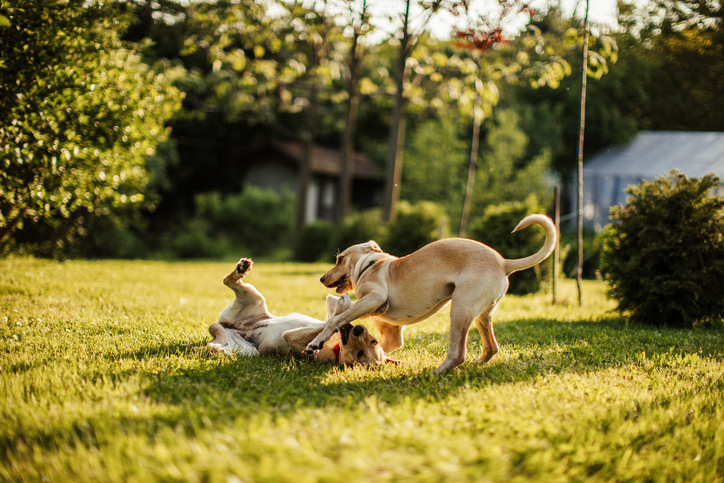
- Loose, wiggly bodies: Muscles look relaxed, not stiff or tense. Movements are bouncy and exaggerated.
- Play bows: A dog lowers their front end while keeping their back end up, inviting play.
- Role reversals: Dogs take turns chasing, being on top, or “winning.” No one stays in control the entire time.
- Open, relaxed mouths: Faces look soft rather than tight or clenched. They may mouth each other during play, but their mouths stay soft.
- Play Sneezes: Some dogs let out quick, shallow sneezes when they’re feeling playful or excited. This is usually paired with a wagging tail or wiggly body to show they are enjoying play and are not a threat.
- Exaggerated Sounds: Play growling can sound loud, but it's usually higher-pitched and accompanied by loose, relaxed body language. This is different from the low, serious growl that serves as a clear warning.
- Self-handicapping: Larger or more skilled dogs adjust their strength or speed to keep the play fair.
- Pauses and breaks: Dogs naturally stop, shake off, sniff the ground, or disengage briefly before rejoining.
- Coming back willingly: After a pause, both dogs choose to continue playing.
The above signs should be seen in all dogs participating in play, not just one! Growling, wrestling, and mouthing can all be part of play when paired with loose bodies, frequent breaks, and mutual engagement.
How Dogs Try to Avoid Conflict
Dogs are highly skilled communicators and usually try to prevent conflict long before it happens. These early signals can be easy to miss, but they are incredibly important.
Early stress or warning signals include:
- Turning the head or body away.
- Lip licking or yawning when not tired.
- Slowing down or trying to disengage.
- Avoiding eye contact.
- Hiding behind people or objects.
- Sitting or lying down during play.
When play partners respect these signals, the interaction stays safe. Problems arise when one dog ignores repeated attempts to disengage.
How to Tell When Dog Play Is Escalating
Sometimes play becomes too intense, especially when dogs are over-aroused or mismatched in play style. This does not automatically mean an altercation will occur, but it does mean it’s time for a break.
Signs that play is getting too rough include:
- Fewer pauses or breaks.
- One dog repeatedly chasing the other without role reversal.
- Bodies becoming more rigid or upright.
- Increased speed and intensity without role reversal.
- Mounting due to over-arousal or stress.
At this stage, stepping in calmly and giving both dogs a chance to reset can prevent further escalation.
Signs of a Real Conflict Between Dogs
A conflict occurs when at least one dog is no longer participating voluntarily, and the interaction becomes tense, one-sided, or unsafe.
Red flags that require immediate intervention include:
- Stiff, frozen body posture.
- Hard staring or whale eye.
- Low, sustained growling or snarling.
- Snapping or repeated biting without release.
- One dog pinning or cornering another who cannot escape.
- A dog attempting to flee while the other continues pursuit.
When these signs appear, the interaction should be safely interrupted, as it is no longer playful.
Why Dog Conflicts Happen
Even well-socialized dogs can have disagreements. Common contributors include:
- Over-arousal or exhaustion.
- Mismatched play styles or energy levels.
- Fear or feeling overwhelmed.
- Pain or illness.
- Guarding food, toys, or space.
- Missed or ignored communication signals.
Conflicts are often about emotional state and environment, not necessarily personality or bad behavior. Your ultimate goal is to watch for early signs of stress and intervene before an altercation can occur.
How to Safely Interrupt a Dog Conflict
Never reach between dogs or grab collars during a conflict. This puts you at serious risk of injury.
Safer options include:
- Spraying water if available.
- Making a sudden loud noise to interrupt attention.
- Covering the dogs with a blanket.
- Using a barrier such as a flat piece of cardboard or wood.
Once separated, allow the dogs time and space to calm down before any further interaction.
How to Keep Dog Play Safe and Positive
You can support healthy play by setting dogs up for success. Here's some tips on how:
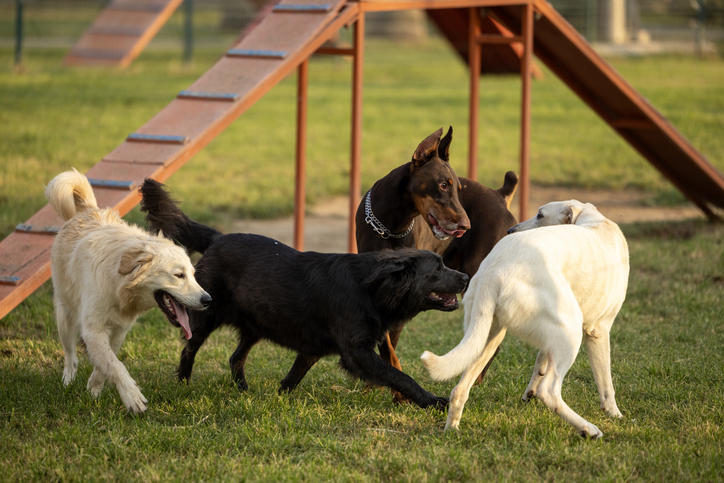
- Match dogs by size, energy level, and play style.
- Supervise play closely, especially in groups.
- Interrupt the play early if it becomes one-sided or you notice signs of stress.
- Build in regular breaks.
- Remove high-value items that may cause tension.
Not every dog enjoys rough play, and that’s okay. Social success doesn’t require constant interaction.
Helping Your Dog Learn Better Play Skills
Some dogs benefit from extra guidance, especially puppies, adolescents, or dogs with limited social experience.
Helpful strategies include:
- Teaching reliable cues like recall and disengagement.
- Setting up calm, one-on-one play sessions.
- Choosing structured environments with trained supervision.
If your dog frequently struggles during play or seems anxious around other dogs, working with a qualified, rewards-based professional can make a big difference.
Let Your Pup Play, Learn, and Grow at Camp Bow Wow
Looking to get your dog more socialization and attention? At Camp Bow Wow, our dog daycare and overnight boarding make sure your pup gets plenty of playtime, social interaction, and mental stimulation. Dogs are grouped by size, temperament, and play style so every Camper stays happy, safe, and comfortable while making new friends.
We also offer professional dog training to help pups practice good social habits, play gently, and build confidence. Reach out to your local Camp Bow Wow to see how we can help your dog learn, grow, and thrive!