

Table of Contents
- Which Dogs Usually Need a Sweater in Winter?
- Which Dogs Usually Don't Need a Sweater?
- Signs Your Dog Is Too Cold on a Walk
- Tips for Choosing the Right Dog Sweater
- How to Help Your Dog Get Comfortable Wearing a Sweater
When it comes to winter sweaters, every dog is different. Their breed, coat type, size, age, and overall health all play a role in whether they actually need one. Not every pup needs an extra layer when temperatures drop, but knowing the difference can make a real impact on your dog's comfort and health.
As a general rule, if it feels cold to you, there's a good chance it feels cold to your dog, too, especially once temperatures dip below 45°F. A few key factors will help you decide whether your furry friend needs a little extra warmth this winter.
Which Dogs Usually Need a Sweater in Winter?
Some dogs are just naturally better equipped for cold weather than others. Here's a breakdown of the pups that tend to need a little extra help staying warm.
Smaller Breeds
Small dogs like Chihuahuas, Toy Poodles, and Pomeranians have a harder time holding onto body heat. Their smaller body mass means they lose warmth quickly in cold temperatures, making a snug sweater a smart addition to their winter walk routine.
Short-Haired and Thin-Coated Breeds
Even some medium and large dogs can feel the cold more than you'd expect. Breeds like Greyhounds, Whippets, Boxers, and Boston Terriers have short, thin coats and very little body fat to act as insulation. Despite their size, these dogs get cold fast and can really benefit from a sweater on chilly days.
Low-to-the-Ground Dogs
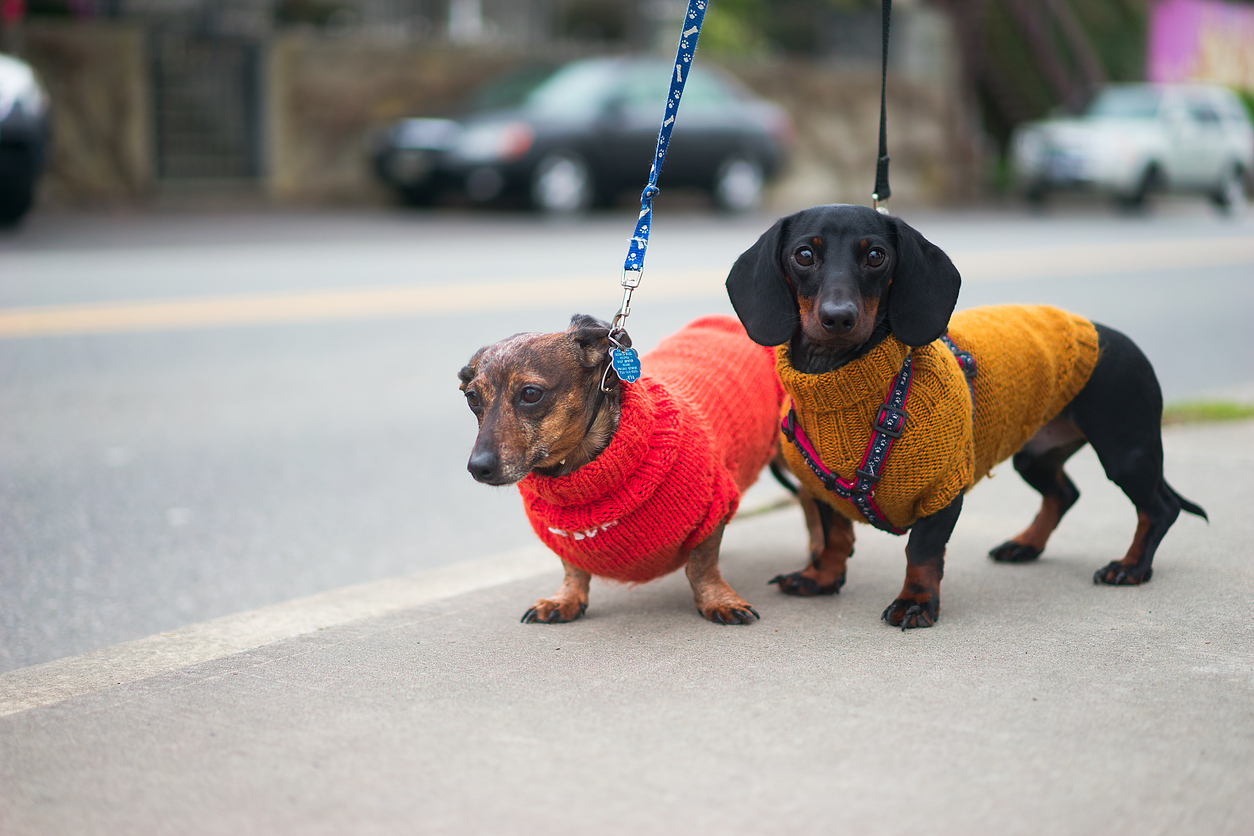
Breeds with short legs, like Dachshunds, Corgis, and Basset Hounds, sit much closer to the cold ground. In snowy or wet conditions, their bellies can quickly be exposed to freezing temperatures. A sweater (or even a jacket) helps protect their underside, where their fur offers little coverage.
Puppies and Senior Dogs
Both puppies and older dogs have a harder time regulating their body temperature than healthy adult dogs. Puppies are still developing, and senior dogs naturally lose muscle mass over time, which means less heat production. Both age groups are more vulnerable to the cold and can benefit most from an extra layer on winter walks.
Dogs with Health Issues or Low Body Weight
If your dog is recovering from an illness, managing a chronic condition like arthritis, or has recently lost significant body weight, they may struggle more in cold weather. Dogs with arthritis, in particular, can find that cold temperatures make joint stiffness and discomfort noticeably worse, and a warm layer can help them stay more comfortable.
Hairless Breeds
Hairless or nearly hairless dogs, like the Xoloitzcuintli or Chinese Crested, have little to no natural coat to protect them from the elements. These pups get cold very quickly and almost always need a sweater (and sometimes even booties) during the winter months.
It's also worth keeping in mind that if your dog recently had a close grooming cut or shave, they may need a sweater temporarily even if they normally wouldn't. A fresh trim can remove more of their natural insulation than you'd expect.
Which Dogs Usually Don't Need a Sweater?
If your dog has a thick, double-layered coat, chances are they're already well-equipped for the cold.
Breeds like Siberian Huskies, Alaskan Malamutes, Bernese Mountain Dogs, and Saint Bernards were literally bred for cold climates. Putting a sweater on one of these pups during a winter walk could actually cause them to overheat, especially if they're running and playing.
The same goes for larger, highly active dogs. A dog sprinting around the yard generates a lot of body heat on its own; adding a layer on top can do more harm than good. If your big, thick-coated dog heads outside for a quick bathroom break, a sweater isn't necessary. If they're a smaller, short-haired breed doing the same thing, it probably is.
Signs Your Dog Is Too Cold on a Walk
Not sure if your pup needs a sweater in the moment? Your dog will usually tell you.
Watch for these signs that your dog is too cold:
- Shivering or trembling; the most obvious sign that their body is working hard to stay warm
- Lifting their paws off the ground, cold pavement or snow can be painful on bare paws
- Tucking their tail or hunching their back
- Slowing down or stopping on a walk and not wanting to keep moving
- Whining or seeming anxious in the cold
If you're seeing any of these, it's time to head inside and consider adding a sweater (or booties) before the next walk.
And if you're ever unsure about what temperatures are safe for your pup this winter, read our guide on how cold is too cold for your dog.
Tips for Choosing the Right Dog Sweater
Once you've decided your pup could use a sweater, fit matters. A sweater that's too tight can restrict movement and cause discomfort, while one that's too baggy can become a tripping hazard or get caught on things.
A few things to keep in mind:
- Measure your dog before buying; most brands ask for neck circumference, chest girth, and back length.
- Match the weight of the sweater to the weather; a lighter knit works well for cool days, while a thicker sweater is a better choice when temperatures really drop.
- Choose a washable material, such as a wool blend or acrylic, that you can clean regularly.
- Look for a leash hole so you don't have to remove the sweater every time you clip on the leash.
- For especially cold or snowy days, consider dog booties alongside the sweater; your pup's paws are just as exposed as the rest of them.
A sweater and booties can go a long way, but there's more to keeping your pup safe in the winter than just what they're wearing. Check out our cold-weather safety tips for dogs for a full rundown on protecting your pup all season long.
How to Help Your Dog Get Comfortable Wearing a Sweater
Not every dog takes to wearing clothes right away, and that's completely normal. The key is introducing the sweater gradually. Start by letting your dog sniff and explore the sweater on the floor before you ever try to put it on them.
Once they seem comfortable, slip it on for just a minute or two while giving plenty of praise and a few treats. Slowly increase how long they wear it over a few sessions. Most dogs come around pretty quickly, especially once they realize the sweater makes outdoor time more comfortable.
One more thing to keep in mind, avoid leaving your pup unsupervised while they're wearing a sweater. Even the most sweater-savvy dogs can accidentally get tangled or caught in the fabric, so it's always best to remove it before leaving them home alone or putting them in their crate.
At Camp Bow Wow, we provide climate-controlled play yards and cozy Camps mean your pup can romp and play all day, no matter what the weather looks like outside. From dog daycare to overnight boarding, we make sure every dog is comfortable, safe, and having a great time, even when it's freezing out. Find your local Camp and let your pup enjoy the warm side of winter.