

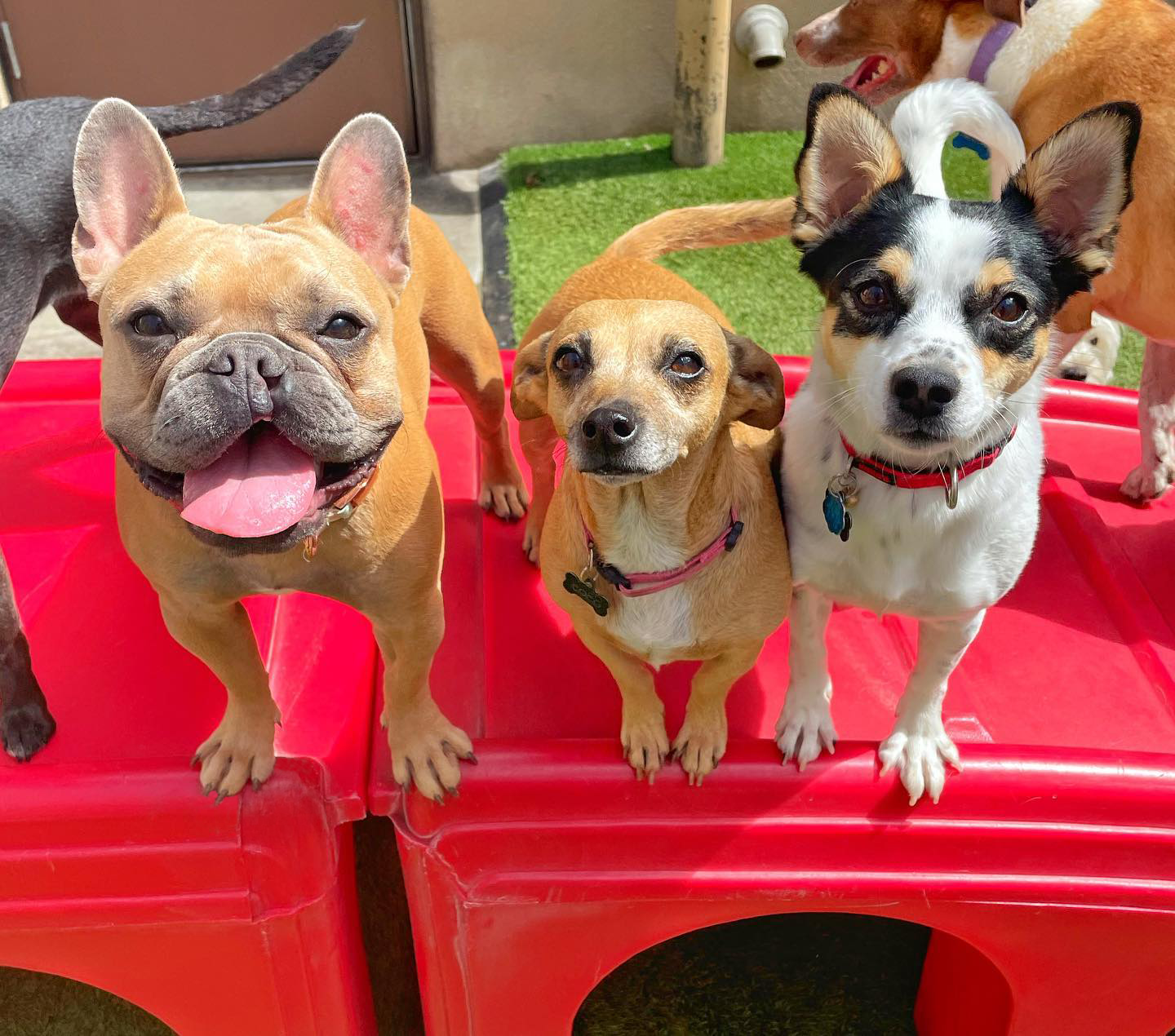
Dog parks. Puppy yoga. The Goldens in Golden Festival in… Golden, Colorado (look that one up for your next vacation). There are so many occasions for dogs to be dogs around other dogs; so much so that 63% of polled pet parents believe their dog hangs out with friends more than they do, according to research done by We Are Talker. This phenomenon of dog-exclusive popularity is so profound that the New York Post found itself reporting on it.
However, we know some dogs are a little more… introverted. If your dog struggles to mingle with other pups, he is certainly not alone. But these are the dogs would likely benefit the most from healthy and safe social time with other pups. Social time is pertinent to a dog’s mental (and even physical!) health – and it starts with socialization. So if you’re looking to get your dog out there, we have some tips.
Table of Contents
- The Science of Woof: The Data Behind Why Canine Friendships Matter
- 7 Data-Backed Tips for a More Social Dog
- Taking Your Dog’s Social Calendar to the Next Level: The Camp Difference
- Frequently Asked Questions?
The Science of Woof: The Data Behind Why Canine Friendships Matter
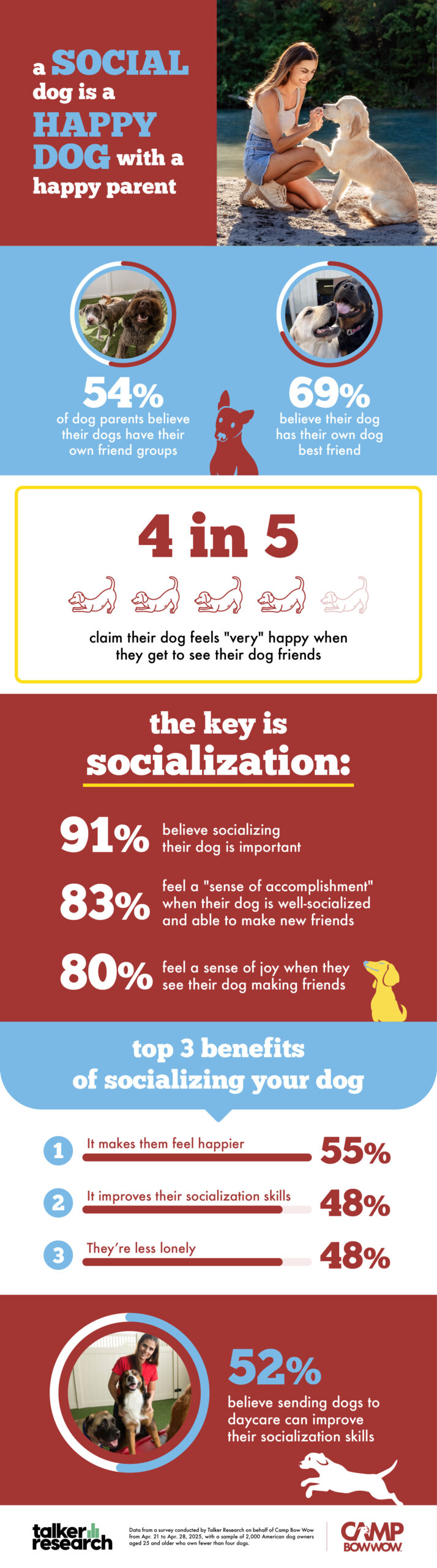
For starters, what are the benefits to social time? Besides the fact that dogs are pack creatures, here’s what our research shows:
The Payoff for You:
79% of owners feel they and their dogs are "living their best lives" when the dog is social.
83% of parents feel a "sense of accomplishment," noting that a well-socialized dog is a rewarding part of the pet parent journey.
Being a pet parent is more than just having a furry friend; it’s devoting yourself to making sure that you’re giving your pup the best life possible under your care.
The Payoff for Your Dog, Too:
A social dog is a happier dog (cited by 55% of parents).
Friendships combat loneliness (48%) and lead to a higher quality of life (45%).
This isn't just a feeling of doing something good for your dog; it's an observable outcome that many pet parents have witnessed.
Something important to note: your dog’s “social life” is only one piece of the puzzle that is “socialization.” Socialization means healthy exposure to the whole world, beyond just other people and pets; it can include sounds, sights, smells and more. Read more about that here.
7 Data-Backed Tips for a More Social Dog
1. Make "Friend Time" a Non-Negotiable in Their Schedule.
Dogs are social creatures – being around other dogs is an instinctual desire that is ingrained in their very DNA. Dogs who are unsocialized often display discontented behavior problems as a result of this unfulfilled need. The difference is observable between unsocialized and socialized dogs: 81% of pet owners report their dogs feel "very happy" when they get to see their dog friends. It's the most direct route to joy.
Get in the habit of scheduling social interactions and playdates onto your calendar. If you don’t have friends that own dogs themselves, look up some local dog meet-up groups (social media, like Facebook groups, is a great place to start) to see which one you and your dog like best. The communities you two enjoy most will incentivize you to prioritize and make time to visit regularly. Schedule happiness; you’re gonna love it, and your dog will, too.
Be aware: dog parks can work for you and your dog in some contexts, but there is a degree of risk involved. Most are only monitored by other pet parents with no firm regulations or vetting of attending dogs, so it's important to take safety precautions and observe interactions before letting your pup join in. After all, your best friend deserves the best.
2. Cultivate a "Social Circle" to Build Confidence.
Over time, a natural response from your dog might be to develop a “friend group” – be sure to hang onto this! 54% of dogs have a whole "friend group." Furthermore, our polling shows that having this group improves social skills, a positive impact noted by 48% of dog owners.
Once you’ve decided on a group or community you and your dog enjoy, make it a habit to frequent the same space. Your dog will learn to recognize the environment and look forward to it. This ritual teaches your dog (and other dogs, too!) how to navigate different social situations, fellow dog temperaments and play styles in a place they know well.
3. Foster a "Best Friend" Relationship.
It’s not just about the quantity of dogs your dog gets acclimated to that indicates success. On the same note, encourage your dog to find another dog they get along really well with. 69% of dogs have a specific "best dog friend." This indicates dogs form deep, preferential bonds.
This may take some exposure, but it’s worth the effort because it’s another way to give your dog a moment of joy. At Camp, your Certified Camp Counselor™ will be able to tell you what other Campers your dog gets along with. Once your dog finds his or her best friend, you could try to connect with the owner and arrange consistent one-on-one time in a familiar environment to build a deeper, more comforting bond. Dog owners love other dogs too, so this should be easy. You might make a new friend, too!
4. Reframe Social Time as a Shared Joy, Not a Chore.
The data is clear: 79% of people feel that they, themselves, are living their best lives when their dogs socialize. Owning a dog is all about fulfillment and new ways of experiencing joy, and engaging in the social life of your dog not only benefits them with the host of new experiences that they now have through other dogs, but it benefits you, too. It might be intimidating to start, but once you find your (and your dog’s) social circle, it can become an enjoyable (and needed) break from usual life. If you do better without a routine and enjoy novelty, change things up by going for a walk with a pet-owning friend instead or enjoy coffee or lunch on a pet-friendly patio.
5. Become a Student of Your Dog's Social Style.
As we said earlier, your dog might be hesitant at the idea of socializing with other dogs. This doesn’t mean something’s wrong with your pup; this could be due to a variety of factors. Camp Bow Wow’s dog behavior expert Erin Askeland, MSc, CPDT-KA, CBCC-KA, FFCP at Camp Bow Wow, says this: "Not every dog is a social butterfly... Respecting each dog's personality is key."
By being keen to certain behaviors and reading the facial expressions and dog body language, you could learn certain cues that indicate discomfort or comfort, and protect your dog’s mental and social health. Erin shares this to look out for, as a general rule: “Good, healthy interactions include loose, wiggly bodies, soft eyes, and clear give and take, whereas stressful interactions may include tucked tails, hackles, stiff posture, avoidance, or even frequent yawns.” – but it’s not one size fits all.
6. Use Structured Environments to Guarantee Positive Interactions.
A significant 36% of dog parents already use dog day care of some kind – an average of four times a month. Why? Because 52% believe it directly improves their dog's socializing skills in the long term.
There are lots of potential environments that may successfully introduce this necessary social time, so don’t give up at just a dog park. A walk in a public space where other canine friends are passing, visiting in another home or even in your own could all be environments that might fare better for your pup.
Camp Bow Wow’s Day Camp ensures your dog is placed in the best environment for him or her by assessing them in new Camper interviews, and Camp is always supervised by our Camp Counselors and supplemented with activities to help warm up newer Campers for puppy playtime.
Don’t give up – the benefit is worth it, and all dogs are capable of having friends!
7. Celebrate the Small Victories — It's a Team Effort.
Dog daycare isn’t some fad. The effects of daycare are real: 92% of parents whose dogs go to daycare at least three times a month feel a “sense of joy” seeing their dog make friends. Fostering this connection also fosters joy all around.
So while you embark on this journey, be sure to celebrate the milestones. Celebrate your first Day Camp. The moment your dog recognizes the word “Camp” and perks with excitement. The moment you see your dog romping with his or her pack, and maybe even the first playdate with a new dog best friend. It’s all worth it, because you’re gonna love every second of it – and your dog will, too.
Taking Your Dog’s Social Calendar to the Next Level: The Camp Difference
Being social is a fundamental pillar of a dog’s happiness and well-being. By understanding the data and putting these tips into practice, you're not just helping your dog make friends—you're building a richer, happier, and more fulfilling life for you both. And while these tips can transform your dog's activity level and social life, many owners find that a specific and structured environment like doggy daycare is the real key to unlocking their dog's full social potential – and Day Camp is designed for every dog.
Your dog has a place with our pack, and our Camp Counselors stay ready to welcome your dog and work with your dog so that he or she has the greatest time, ensuring happy dogs are part of our everyday environment. Ultimately, our mission is refreshingly simple: Making Happy Campers™.
To learn more about the benefits of pet meetups and find out if Day Camp is the right fit for your pup, learn all about Day Camp and all of our other services here or by visiting your local Camp Bow Wow.
Frequently Asked Questions
Is it good if my dog is tired after socializing?
Some pups don’t know how to self regulate well, so they may keep playing or staying active past their threshold which may cause exhaustion. This is not the same as a content, fulfilled dog! Social time for a dog doesn’t have to be physically active to have a positive impact. In fact, it’s a great skill for dogs to be able to relax or engage in low energy activities around other dogs. An exhausted dog may become grumpy or take longer to recover, which can leave a poor association to that precious social time. A balanced social life with time to recover or quiet time with dog friends is part of a dog’s healthy social
How frequently should I provide social time for my dog for optimal health?
Providing your dog with social time several times a week supports their mental, emotional, and physical well-being. The ideal frequency depends on your dog’s age, temperament, and energy level, but sessions should always remain positive and not overwhelming. Additionally, regular, friendly interactions with other dogs, people, and environments can help prevent behavior problems and build lasting confidence.
What are the signs of healthy play behavior in dogs?
Healthy play often includes loose, wiggly body language, play bows, bouncy movements, and pauses for short breaks. Dogs may switch roles during play (such as one chasing, then the other) to keep things even. You may also see adaptation in play styles where one dog will adjust their play to better fit another.
Can older dogs still be socialized effectively?
Older dogs can still enjoy and benefit from socialization with the right approach. It may take more time and patience, especially if they’ve had limited exposure in the past. Focus on gradual, positive introductions to new people, pets, and environments to keep the experience enjoyable and safe.