

Table of Contents
- Why Ice Melt Is Dangerous for Your Dog
- Signs Your Dog Has Been Affected by Ice Melt
- What to Do If Your Dog Eats Ice Melt
- How to Protect Your Pup From Ice Melt
- How to Choose a More Pet-Safe Ice Melt
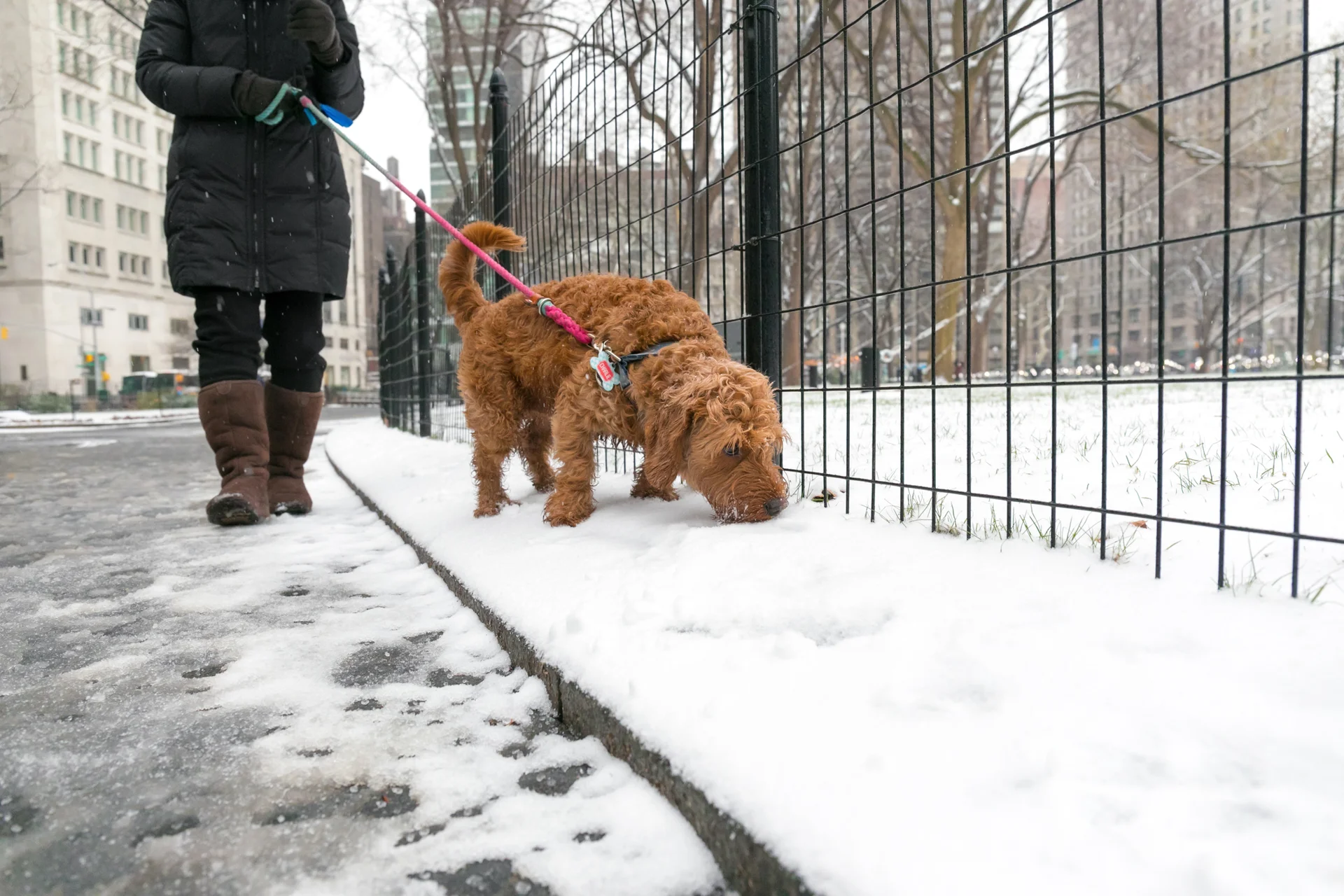
When snow hits the ground, salting the sidewalk keeps your family safe from slips and falls, but what about your pup? The short answer: no ice melt is completely safe for dogs, though some products are much safer than others. Traditional rock salt can irritate your dog's paws and cause stomach upset if licked or swallowed.
Below, we’ll cover why ice melt can be dangerous for dogs, the signs to watch for, what to do if your pup gets into it, and how to choose a more pet-friendly option.
Why Ice Melt Is Dangerous for Your Dog
The most common ingredient in traditional deicers is salt, but we're not talking about table salt. Most ice melt products contain chloride salts, such as sodium chloride (rock salt), calcium chloride, or magnesium chloride, which melt ice by drawing in moisture and generating heat.
That same process is rough on your pup in two ways:
- On their paws: salt crystals can get lodged between paw pads, drying out and cracking the skin and, in some cases, causing painful chemical burns.
- In their stomach: dogs lick their paws after walks, which means they can swallow the salt they walked through. Even small amounts can cause drooling, vomiting, or diarrhea, and eating a larger amount, like from a spilled bag, can lead to more serious problems that need immediate veterinary care.
Signs Your Dog Has Been Affected by Ice Melt
Signs of paw irritation from salt include:
- Red, dry, or cracked paw pads
- Limping or reluctance to walk
- Excessive licking or chewing at their paws
Signs your dog may have swallowed ice melt include:
- Drooling
- Vomiting or diarrhea
- Lethargy or weakness
- Tremors or unsteadiness in more serious cases
If you notice any of these signs, contact your veterinarian. Even mild symptoms warrant a call, especially in small dogs.
What to Do If Your Dog Eats Ice Melt
If your dog walked through ice melt or you suspect they've swallowed some, take these steps:
- Rinse their paws with warm (not hot) water and pat them dry to remove any residue.
- Keep them from licking their paws until they're fully clean.
- Watch for symptoms like drooling, vomiting, or changes in behavior.
- Call your vet or the ASPCA Animal Poison Control Center at (888) 426-4235 if you think your pup swallowed more than a lick or two, or if any symptoms appear. Never make your dog vomit unless a veterinary professional tells you to.
How to Protect Your Pup From Ice Melt
A few simple habits go a long way during salt season:
- Wipe your dog's paws after every walk. Even if you can't see salt on their paws, residue can still be there, irritating their skin, so clean between the toes and around the pads. Keeping wipes or a damp towel by the door makes it easy.
- Consider dog booties. Most dogs need some time to warm up to wearing shoes, so give it a try with plenty of treats, and take them off if your pup seems miserable or tries to chew them off.
- Try dog socks or paw balm. If boots are too clunky for your dog, thin dog socks offer lighter protection, and a pet-safe paw balm creates a barrier between their pads and the pavement.
- Don't let your pup lick thin snow. A few inches of fresh snow in the backyard is fair game, but a light dusting on the sidewalk (typically anything under 2 inches) means they're really licking the pavement and the salt on it. For more on winter weather safety, check out our guide on how cold is too cold for dogs.
- Store the bag out of reach. Some dogs like the salty taste and will help themselves to an open bag, which is the most dangerous kind of exposure.
How to Choose a More Pet-Safe Ice Melt
Here's the catch pet parents should know: "pet friendly" labels aren't regulated, so a happy dog on the bag doesn't guarantee a safer formula.
When shopping for a pet-safe ice melt:
- Look for urea-based or chloride-free products. These are generally the gentlest options for paws and stomachs, though they can still cause mild stomach upset if eaten.
- Check the ingredient list. If you see "chloride" anywhere, take the same precautions you would with regular rock salt, no matter what the label claims.
- Consider chemical-free traction. Sand or plain kitty litter won't melt ice, but they add grip to slippery spots without any risk to your pup or the neighborhood pets.
Even with a pet-safer product on your own walkway, remember that sidewalks and roads around town are usually treated with traditional salt, so paw wiping stays a winter-long habit.
Warm Paws, Happy Tails at Camp Bow Wow®
Who says adventure season ends when the snow starts? At Camp Bow Wow, we provide dog daycare and boarding where your pup can romp, socialize, and burn off energy in our climate-controlled play yards, all under the care of our Certified Camp Counselors®.
Bring your dog in for a winter adventure; they'll be dreaming about it all the way home. Find your local Camp Bow Wow and book a cozy day of play this winter!