Dog Boarding from Campbowwowusa.com Pet Boarding Information Dog Daycare Locations Pet Sitter Rules CBW In The News Pet Boarding Franchises Dog Daycare Partners
Pet Boarding FAQ

What is the interview process and why does my dog need to be interviewed?

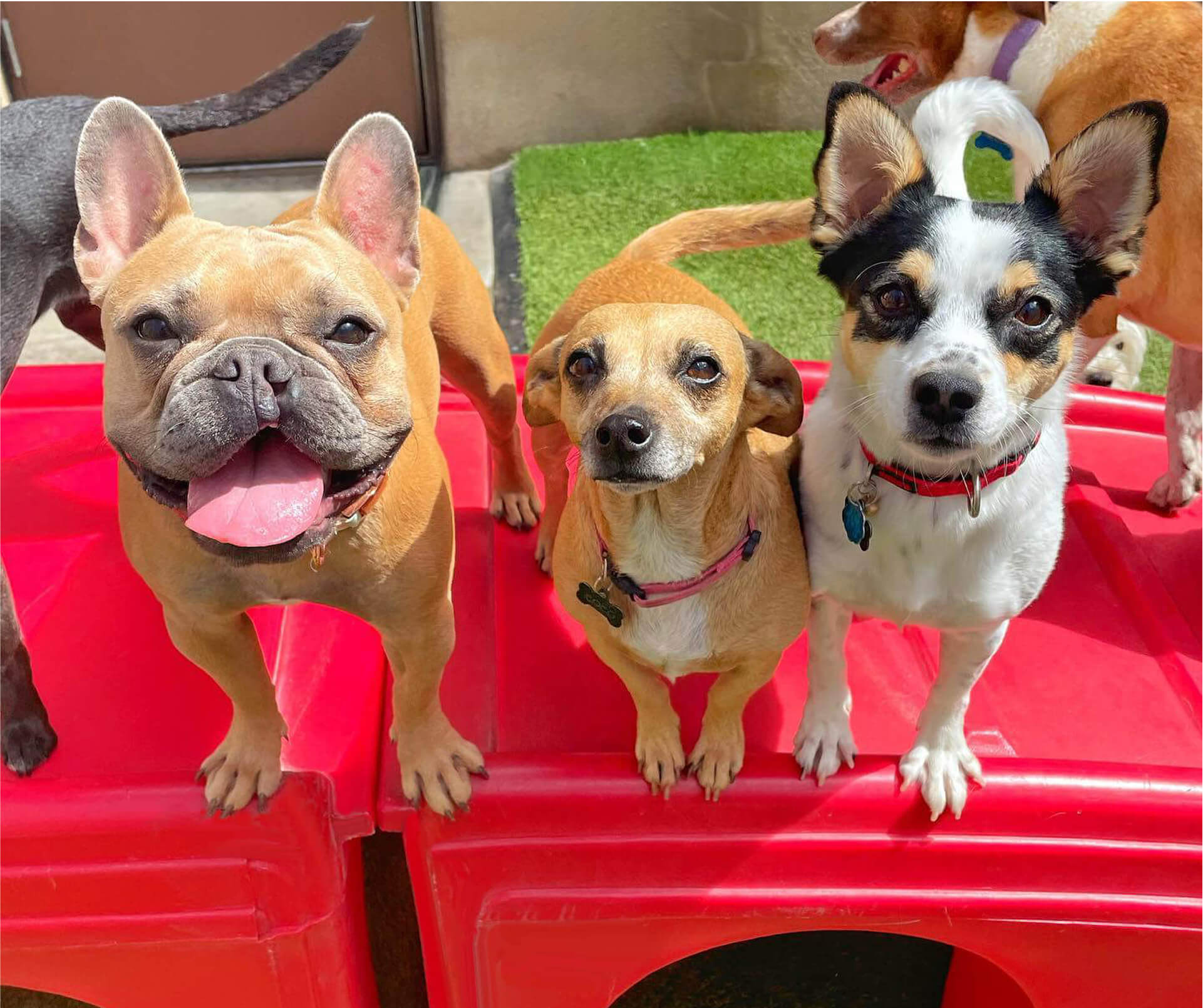
The interview process is something every dog that comes to Camp Bow Wow must do.  When you bring your pup in for the interview he/she will meet some other playful pups in our interview room.  At this point the owner is not able to watch because dogs always act differently around their owner.  We are looking to see how your pup interacts with the dogs and we make sure this type of environment is a good fit for your dog's lifestyle.  

Camp Bow Wow is an open play environment which means your dog will be in constant contact with other dogs that are similar in size and temperament.  The interview process is used to learn more about your dog and to help adjust your dog to t his atmosphere.

What do I need to bring with me the day of my dogs interview?

You will need to bring your dogs updated vaccine records.  Your dog will need to be current on its rabies, distemper and bordetella shots.  The bordetella vaccine is required to be updated every 6 months.  You can save yourself time by having your vet records faxed directly to usTo save you more time you can download our online application and fill that out at home and bring it with you the day of the interview.  Also make sure your dog is wearing a quick release collar for his/her safety while they play at Camp Bow Wow.


My dog doesn't get along with other dogs. Can I still board him and have him stay in his cabin all day?

No. Camp Bow Wow is an open play environment where dogs need to get along with other dogs.  The dogs that stay overnight here get Doggy Daycare during the days so they must get along with the other pups!


My vet said my dog is up to date on all of his vaccines but he doesn't have a bordetella shot. Do I still need to get it?

Yes. Some vets do not include Bordetella vaccines in their regular protocol. This is a vaccine for canine cough which is important in situations where dogs will be socializing in large groups. All campers must have a Bordetella vaccine before they can come for day camp or boarding. See below for more information on canine cough.


Why does my dog have to stay in his/her cabin for an hour and a half after breakfast/lunch/dinner?

Keeping your dog in his/her cabin for an hour and a half after eating greatly reduces the risk of bloat. Camp Bow Wow takes every precaution necessary for the health and safety of your dog. See below for more information on bloat.


My dog is boarding but not eating lunch. Why does he go in his cabin at lunch time?

All boarding dogs take a nap at lunch time even if they are not eating. This is done to give them a break during the day and give them a chance to take a nap. After their nap they are ready to romp and play with the other dogs again!


Do you allow dogs at camp to bark and jump?

Yes. Camp Bow Wow is where a dog can be a dog and dogs bark! We do allow campers to jump on us for a little extra attention. Let us know if you would like us to keep your dog from jumping and we will do our best to make sure they do not jump on us.


Information on common canine diseases:


Bordetella (Canine Cough)
Bordetella (ITB-Infectious Tracheo-Bronchitis) is the most common respiratory infectious disease in dogs.
Similar to the common cold in humans, the organisms that cause canine cough are airborne. Dogs can catch this debilitating, persistent disease simply by being close to other infected dogs. It is spread by human handling, through cages and food/water bowls. This is why it is common wherever dogs are housed or confined together.
Symptoms:

    loud “honking” cough
    nasal discharge
    watery eyes
    loss of appetite
Once contracted
    It generally takes a week or two for it to completely run its course.
    The dog will suffer no permanent damage.
    The vet can prescribe a cough suppressant to minimize the amount of coughing episodes.
Prevention
    There is no cure for Bordetella; the best defense is prevention.
    The vaccine only protects against 64% of Bordetella strains.
    Currently there are two types of vaccines for Bordetella, intranasal and injectable.
Intranasal:
     The intranasal vaccine has a fast onset of action, so it is better to use if the dog is being boarded or planning on attending daycare. It is best to have the vaccination done at least one week before the dog comes to camp so that the vaccine can actually work. Doses given immediately before kenneling are not protective. Unfortunately, the intranasal does not last very long. Dose recommendations range from every three weeks to every six months.
Injectable:
     
The injectable vaccine is better for long immunity duration, but current reports suggest that it produces only a very low level of immunity. Vaccination does not 100% guarantee that the dog will not get an infection, but it may lessen the course of the disease.


Distemper
The American Veterinary Medical Association considers canine distemper the single greatest disease threat to the world’s dog population. Canine distemper virus is fatal to 80% of the puppies and 50% of the adult dogs that contract it.
Symptoms
    congested lungs
    nasal discharge
    gunky eyes
    coughing
    weight loss
    vomiting
    diarrhea
As the disease progresses, it attacks the nervous system, often causing partial or
complete paralysis & seizures
Transmitted
    through the air
    by direct contact with urine
    by direct contact with feces
    mucus secretions from infected dogs
    contact with kennels, bedding, toys, etc. that may hold the virus

Once Contracted
    Once the dog is infected, there is no cure. The disease must run its course. Dogs that recover from distemper may develop hardened foot pads, nose leathers, and/or vision/nervous system problems throughout their lives.
 Prevention
    Distemper is only prevented by vaccination. According to AVMA, some veterinary medical scientists estimate that practically every dog that lives to be a year old has had contact with the virus at some time. Distemper is so prevalent and the signs so varied that any sick young dog should be taken to a veterinarian for a definite diagnosis. Most distemper cases appear in dogs less than 6 months of age and in old dogs that have not been routinely vaccinated.

Heartworm
Canine heartworm is a dangerous disease, which has spread to virtually all parts of the United States. It is spread by mosquitoes; thus, areas heavily populated by these insects are at greater risk.
What is Heartworm?
    Parasite that lives in the blood of a dog’s heart and adjacent blood vessels. Adult heartworms living in a dog’s heart produce offspring called microfilaria that circulate in the infected dog’s blood. It can take 3 months for the heartworm to reach a mature length of 9-14 inches. At this time the female heartworm begins to produce microfilaria. It takes about 6 months from the time the dog is bitten by an infected mosquito until adult worms produce microfilaria. In some cases, up to 200 worms can be found in the heart.
Symptoms
    difficulty breathing
    coughing
    lack of stamina
    weight loss
    rough hair coat
In many cases, these are advanced symptoms. Some dogs do not appear to have symptoms in the early stages.
If not detected & controlled with proper treatment, heartworms can lead to congestive heart failure and death.
Prevention
    Heartworm disease is easy to prevent if you follow precautionary measures. Take pup to vet early and talk to them about which medications are right for your dog. Follow medication’s directions and you won’t be concerned with this dangerous disease.
    Some medication available
          once a day chewable (Filarabits)
          once a month chewable (Heartgard, Advantix)
          6 month injectable (ProHeart6)
          mosquito repellant that does not contain DEET
Diagnostic Testing and Preventative Medication
    Highly effective diagnostic testing and preventative medications have been developed. It is necessary to have a heartworm test prior to using a preventative medication if the dog is over 4 months. Severe or fatal reactions may occur if they are given to dogs with heartworm disease, or may create diagnostic confusion at a later date. Testing is usually done in the spring (March-April) when mosquitoes develop. A small amount of blood is necessary for a heartworm test, which is very accurate in detecting the disease. If the dog tests negative, he/she is put on preventative medication from April-December. The preventative medication kills the immature larvae before they become adults. It does not kill the adult heartworms.
New Medication Available
    Heartworm treatment should be much safer for dogs now that a new medication,Immiticide, is available to veterinarians. This medication has fewer side effects and kills a higher percentage of heartworms than Caparsolate. When the heartworms are killed by medications, a danger of embolism results if the dead worms block the flow of blood to the lungs. This is a common cause of death during a heartworm treatment. This risk still exists with Immiticide, but to a much lesser extent, due to differences in the timing of heartworm deaths. Immiticide does not appear to damage the liver or kidney. Following treatment, complete rest is needed. Excitement and exercise should be avoided for at least a month, followed by gradual
return to normal activity.

Bloat
Bloat is the second leading killer of dogs: it is a canine medical emergency. Bloat occurs in two forms:
swelling of the stomach from gas (gastric dilatation) or torsion (gastric dilatation with volvulus) which occurs when the stomach twists on its axis. Often, both forms of bloat occur in a single episode. When this happens, bloat is fatal in minutes. The disease progresses in minutes or at most hours. The only treatment is emergency medical attention. In its two advanced forms, the only treatment is surgery.
Symptoms:
    excessive salivation
    extreme restlessness/pacing

    unproductive attempts to vomit/defecate
    evidence of abdominal pain
    rapid breathing/panting
    collapse
Risk factors:
    170% increase for each unit increase in chest depth/width ratio
    110% increase associated with using a raised food bowl
    63% increase associated with having a 1st degree relative with Bloat
    20% increase for each year increase in age
    15% increase for speed of eating (for dogs weighing 49-100lbs)
Important tips for prevention:

Raised food bowls:

Pet Suppliers & manufactures have made claims that raised feeder/bowls aids a dog’s digestion and prevents bloat. No scientific research supports these claims. Some studies found that a raised feeder actually increases the risk of  bloat 110%. Approximately 20-50% of bloat cases were attributed to a raised food bowl.
   

Gulping food:
         

When a dog gulps food, the dog ingests air with the food. air ingestion causes gas that may in turn cause the dog to bloat. This is especially the case in dogs that weigh more than 49lbs.
   

Exercise after eating:

Allow at least 1.5 hour of rest after eating. The worst activity a dog can do after eating is rolling onto its back.
   

Feed multiple meals:

Studies have shown that feeding in the morning and evening greatly reduces the risks of bloat.
   

Changing food:

It is extremely important to introduce new food slowly; it can take several weeks for a dog to adapt.New food not introduced slowly can cause extreme gas in the stomach and in some cases bloat.

Important
If you think a dog has bloat don’t hesitate, RUSH to the closest veterinarian. In this circumstance every minute counts, if left untreated there is a 100% fatality rate!

Hot Spots
Hot spots are localized areas of skin inflammation and infection. The infection can be superficial or deep. Other common names for this condition include: moist dermatitis, and acute moist dermatitis.
Symptoms
    redness, oozing, pain
    hair loss
    highly agitated mood
    sensitivity when touched
Causes
    external parasites (fleas or mites)
    insect sting or bite
    allergies (food, inhalant, contact)
    injury (skin wound, scrape, etc)
    boredom or stress-related psychological problems
Treatment

    shave area & get air to the infected area
    cleanse with cool water & gentle skin cleanser
    cool compress the area 2-4 times/day with cool washcloth
    vet prescribed antibiotic topical drying sprays or medications
    prevent licking, biting, and scratching area


Location
14411 Foltz Parkway
Strongsville, Ohio 44149
View Map
Email Us
 
Phone
Camp:(440) 572-3200
Fax:(440) 572-3202
 
Hours
Weekdays:6:30am - 7pm
Saturday:8am - 7pm
Sunday:8am - 11am & 4pm - 7pm
Holidays: 8am - 11am & 4pm - 7pm
  

Home | About Us | Camper Cams | Pricing | Reservations | Work at Camp | Events & Links | Foster Dogs | Coupons | FAQ
Copyright 2007-2009 by D.O.G. Development   Terms Of Use  Privacy Statement  Admin